


S4 E5
STEPPING OFF THE YELLOW BRICK ROAD
In this episode, Rob joins Gem for a conversation filled with wisdom, love and an incredibly moving cow story. Rob shares his journey as an independent artist, moving from chasing the traditional music industry "artist's fairy tale" to building a thriving career on his own terms. Together, they explore the power of stepping off prescribed paths, the intersection of queerness and spirituality, and the importance of DIY culture in creating the spaces we need outside of the mainstream. Rob opens up about how love and community drive his work and his realisation that artists, artwork and audience are all you really need to make meaningful art.
If you've ever wondered whether there's a different way to achieve what you're working on, this episode is for you!
THE TRANSCRIPT
Gem Kennedy (00:00)
Hi Rob, thank you so much for joining me. I'm really excited to talk to you. And ⁓ yeah, I'll just say that to begin with.
ROB.GREEN (00:08)
Thank you. I'm excited to talk to you too. I'm so
excited to be chatting to you. So thanks for inviting me.
Gem Kennedy (00:14)
Yeah, not at all. And I think we've got some really good things to talk about. When I first saw you speak at Reclaimed Means Business, I was like, I really need to talk to you and just your whole approach to things and the way that you talk about your work is so, it gives me goosebumps. Like it's really, really cool. So I'm really excited to hear you share more about your story and all the cool things that you do. And if you're happy to, would you mind just sharing a little bit more about yourself and what you do in your own words?
ROB.GREEN (00:39)
Yeah, sure.
So, yeah, I normally describe myself as I'm a sort of alternative soul singer-songwriter from Nottingham. I'm an independent artist. I manage myself and represent myself. And I build my own tours. I'm a touring artist. And ⁓ I also create music for musical theatre, often for families and for young people. And...
Yeah, I act, perform, do lots of different kinds of performing and yeah, and I've been a full-time professional musician since 2017. I think that's it. think that's everything I do. Yes.
Gem Kennedy (01:19)
I mean, it's quite a lot of things. I'm not surprised you're super
busy. But yeah, that is a lot. ⁓ And I mean, one of the things that I was so struck by that you shared at Reclaimed Means Business was your, I hate the word journey, but like your, I guess, journey to getting to where you are now and what you do. And it's unconventional in that you started out following the conventional paths and then over time realised that like a lot of that was maybe smoke and mirrors or wasn't quite what you wanted. I wondered if you'd be happy for context just to share a bit about
ROB.GREEN (01:46)
Hmm.
Gem Kennedy (01:49)
that so people understand like when we move on to other questions where you're coming from with all of that.
ROB.GREEN (01:54)
Yeah,
well, yeah, in the chat with Reclaimed Means Business, I sort of framed, referenced something that I've sort of jokingly referred to as the artist's fairy tale. Most people are aware of the fairy tale, even if they're not artists, which is like, you work hard and you write your songs and you perform. And one day someone sits and, you know, an A&R comes into the room and they see you and they go, wow, this kid's really talented. I'm going to...
take them on a magic carpet ride of sold out shows and arena tours and record deals and all that stuff. And although to say it out loud sounds like a joke, the truth is that certainly for my generation of artists, that was like a real thing that we hoped for. And we knew that it was a rare thing or we kind of knew that it wasn't something that was guaranteed to happen. But a bit like playing the lottery, it was like.
Gem Kennedy (02:23)
you
ROB.GREEN (02:46)
He's like, yeah, you've just got to go for it and you know, it will work out, it will happen. Someone will come along and they'll pick you. That's like the main thing. And so I did that really diligently, you know, really worked hard, performed. And almost every time something came back from the "industry" or the industry changed in some way, you know, when I first started social media wasn't really a big
Gem Kennedy (02:50)
Yeah.
ROB.GREEN (03:11)
thing for artists like Instagram had just kind of come around in 2012 and Spotify was only just kind of finding its legs. So it kind of about gigging and performing. so I was like building my local fan base and I have an amazing, amazing fan base. the, know, I was selling out shows in Nottingham and then we were inviting A&Rs and it was like, you know, you need to get a manager really. And I had a manager at the time, wonderful guy, Greg Lonsdale.
but both of us were newbies and we didn't necessarily have all the connections. So we got, you know, I got another co-manager who had connections and then it was about connecting with the producer and then I was performing gigs and then it was about getting labels down to these gigs. And you know, you were building and building and almost every time something would come back, you know, they wanted to, I would sell out a show in Nottingham and they'd be like, well, we need to see if he can do London. So then I'd sell out show in London. And I remember this show in London.
14, it was unprecedented, 14 record label executives from, not executives, record label team from quite a big label came, sat in the back of the show. It was an amazing show, really loved it. They loved it. And then the head of the label got fired over the weekend and it was like starting from zero again. And, you know, the stories go on and on, but the mentality that I had throughout that whole period was, know, I just want to get it right. It's a bit like being on
Gem Kennedy (04:13)
Wow.
Hello.
ROB.GREEN (04:37)
like the yellow brick road, was like, just got to follow the path if I just keep doing this. And people say it to you, you keep it up, keep it up, keep doing it. And so that's what I was doing. And I basically got to a point where I had built around me without meaning to a sort of structure where because my mentality was I just want to get it right, I'd surrounded myself with people who I believed.
Gem Kennedy (04:42)
Yeah.
ROB.GREEN (05:06)
had all the answers and would be able to just tell me what to do and I would just do it and be a good boy. and slowly what I realised was I was miserable. I was miserable. It was really hard to keep up. And then you give yourself a hard time for being miserable because you're telling yourself, well, this is what your dream looks like. This is like what you should. You should be happy. This should be great.
Gem Kennedy (05:11)
Yeah.
you
ROB.GREEN (05:32)
And my gosh, I love performing. Second, I was on stage, I was in my element and I loved it. I found myself more and more dreading coming off stage and going into my real life. And I've got so many artist friends of all different levels of fame and success in different senses of the word. And I don't really link fame and success together.
Gem Kennedy (05:36)
Mm-hmm.
Mm-hmm.
ROB.GREEN (05:57)
I've seen them deal with really difficult things, with loss, with the ups and downs of achieving goals and missing goals, the ups and downs of being very popular and famous and then not being. And I was thinking to myself, I'm going through a lot of the things they're going through and I'm not famous. And I'm not whatever. How is that possible? How is it possible to be having a miserable time when your ship in your eyes is not even out of the dock?
Gem Kennedy (06:10)
Yeah.
Mm-hmm.
ROB.GREEN (06:27)
And then 2020 came and you know, there's a number of epiphanies that happen, but basically I reached a point in 2020 as most of us did, where I really had to make a decision about... I really needed to reflect on my life and how my life was going and how my career was going and really ask myself, is this working for me? Is this sustainable? Because if it's...
Gem Kennedy (06:53)
Mm-hmm.
ROB.GREEN (06:56)
if it's taking you to the foot of the cross, as my mom would say, now, and you haven't really started, you know, I'd recorded a whole album, but it wasn't released yet. I, ⁓ you know, had built all of this stuff, but I hadn't actually started to do anything with it. And there was all this difficulty around and all this, I'd realised that I'd created an environment around me where my voice actually had very little value. And I'd...
Gem Kennedy (07:24)
you
ROB.GREEN (07:25)
you know, I have to admit, had kind of through insisting that I surrounded myself with people whose voices I valued more, silenced myself. And there's like a little voice in my head. It's like your inner child eventually just goes, "Man, this is so unfair. I'm done." And, and yeah, and it's something it was like a slow, took about a year of like,
Gem Kennedy (07:32)
Yeah.
I've had enough.
ROB.GREEN (07:55)
making decisions that were right for me that were about actually I'd love to say that these decisions came to me as like you know yeah I'm just gonna go independent and I'm just gonna do this and I'm gonna you know I know what I'm doing and I'm gonna go my own way or whatever but actually it was from facing a brick wall and going I literally can't I don't know how to go forward this way anymore
Gem Kennedy (08:08)
Mm-hmm.
Yeah.
ROB.GREEN (08:25)
I saw on your Instagram, you have this beautiful thing about the sort of middle bit, the sort of change, the ⁓ sort of midpoint where you have to let go of the things that don't work, but you haven't quite yet held on to the things or found the things that are going to work. And 2020 was that for me. I was letting go of stuff and making room for stuff, not consciously, but also being that I actually don't know what next.
Gem Kennedy (08:32)
Mm-hmm.
Yeah. Okay.
ROB.GREEN (08:56)
looks like. And then, yeah, from there, which I'm sure we'll go into in a minute when I finish giving this long speech, is that, yeah, from there for me, I sort of had this clean palette. And then it was about making, finally starting to hear my own voice, having enough silence to actually hear what I think is right and what I want to do and not what is supposed to be done or what is usually done. And
Gem Kennedy (08:57)
Yeah.
you
Mm-hmm.
ROB.GREEN (09:25)
yeah then coming to terms with why that was such a scary idea. So that that was me up to the point of deciding to go independent. I hope that covers what you asked me because... yeah okay.
Gem Kennedy (09:31)
Mm-hmm.
It really does. Yeah, thank you so much. And I think that
for anyone who yeah, just hasn't come across your work before, obviously, like they should absolutely check it out after this but having that kind of context to understand like how radical it is that you decided like, no, I don't consent to this anymore. This doesn't work for me. And then it wasn't, I guess, because for a lot of people, they may, I mean, I'm thinking of a client recently, for example, a lot of us then decide that
ROB.GREEN (09:53)
Hmm.
Gem Kennedy (10:02)
well then that industry just isn't for me' or like i just can't pursue that anymore and actually what you did is is radical in that it's like i say no to those things but i still choose to perform i still choose to do these things on my own terms and like we'll talk about that in a moment kind of how you carve that path when you've rejected like all of the traditional markers of you know what you're supposed to do in those industries or you know what's considered the next right thing to do and yeah so i think it's really really cool thank you for sharing more about it.
ROB.GREEN (10:15)
Thank ⁓
Yeah, think, you know, it's that it's the you're so right when you say that, you know, you you go, OK, well, I can't do the I can't not I can't but actually... this is the harder thing. Can't is one thing. Actually not being physically able to do something is one thing.
Gem Kennedy (10:50)
Mm-hmm.
Mm-hmm.
ROB.GREEN (10:54)
Being
able to and choosing not to, actually for some reason is harder because then you have to go to, you know, if you've built yourself as I had at the time as somebody who could handle it, I can handle it. Throw anything at me. I'm gonna make it work. I'm gonna twist and bend and adapt and make it work. I can do it. I'm, you know, let's, you know, this is what I wanna do. I'm gonna figure it out. To reach a point where you go, actually enough.
Gem Kennedy (10:59)
Yeah. ⁓
Yeah.
Mm-hmm.
ROB.GREEN (11:23)
This doesn't work. For me, it wasn't this resolute sense of certainty. You know, it took me over a year to reach the decision to really choose to step away from these things. And I didn't do them all at once. They happened in baby steps and slow. It felt like the universe was going, okay, so here's the first truth. And you go, cool, okay, cool.
Gem Kennedy (11:24)
Yeah.
Mm-hmm
Yeah.
ROB.GREEN (11:48)
dealt with it and then it's like, and here's the next one. And you're slowly being led off the path into the woods. And I distinctly remember this moment in lockdown and near my house where I live in Leeds is ⁓ loads of fields and countryside. It was actually a blessing in lockdown to have so much open airspace. Went up the hill to this farm that I
Gem Kennedy (11:51)
Totally. Yeah.
Mm-hmm.
ROB.GREEN (12:18)
was going to kind of, you know, each day when we were allowed to do our one walk going up there. And I was sat looking at this field on like that sort of stone, those kind of stone walls that go alongside farm, looking across the valley and thinking, maybe this is just how it ends. Maybe this is just how my career ends. You know, I gave it a good run. I tried. There's no shame in walking away from.
Gem Kennedy (12:41)
Mmm.
ROB.GREEN (12:47)
music at this point. You know, I really tried everything that I could. I had my one chance, didn't work out. And it was really sad. It was like ⁓ a real feeling of beyond failure. It was kind of like a not to throw this word around, but it kind of felt like a kind of death. There was something about it that felt like a grief. And
Gem Kennedy (12:49)
Yeah.
Yeah.
Mm-hmm.
ROB.GREEN (13:16)
the the thing honestly that kind of like started i didn't realise it at the time, this is going to sound like such a weird story, but the thing that brought me around was in that field right? I can't believe I'm about to tell this story. In that field there was this cow right?
Gem Kennedy (13:29)
You
I love cows by the way. love them a lot. Snap! They're like my favourite animal. yeah.
ROB.GREEN (13:35)
⁓ me too! ⁓ my gosh, me too! Okay, cool. ⁓ me too! ⁓ me too, yeah. I feel seen. I was like, Gem's
gonna respond to this one of two ways. I love cows. Oh my gosh, okay, same, same. I love cows. Okay, cool, I feel less weird telling the story now. Okay, so.
Gem Kennedy (13:50)
I love cows so much. Anyone will tell you!
haha
ROB.GREEN (14:02)
So I'm sat in this field and the reason why I kept going to that field is because there was this cow, right? There were loads of cows, young, young cows. Carves, They're called calves, aren't they, when they're young. And there was this one cow and I have never seen a cow behave this way. They'd like basically see me on the other side of the wall, there was all this grass near where I was stood. And obviously the cows had eaten all the grass that was in the field. And...
Gem Kennedy (14:07)
Mm-hmm.
Mm-hmm.
ROB.GREEN (14:32)
the cow basically would like come to the wall and was like looking at me, looked at the grass that there was no grass in their field, kind of did a chewing motion but wasn't chewing anything, then looked over the wall at the grass. And I was like, this cow is basically telling me I eat this, I want that. And it's so like, and it was like this moment where I was like non-verbally just felt very
Gem Kennedy (14:47)
Yeah.
Yeah, give me some!
ROB.GREEN (15:02)
connected to this cow so every time I went to the field this cow would see me and just this one one every time walk over and like ask for more grass and then when all the grass was gone when it had been trimmed down or whatever I would just go there and they'd just come over and stand by the wall with me while I was you know having whatever existential crisis was happening at the time. And then there was this one day so I'm having this feeling of like maybe it's over and maybe it's done you know
Gem Kennedy (15:09)
Yeah.
huh.
ROB.GREEN (15:30)
And I go up to the field and the cows aren't in the field. And the next day they're not there and the next day they're not there. And it's like three weeks and the cows aren't in this field. They're not on the farm at all. And it slowly dawns on me that the cows might not be around at all, if you know what saying.
Gem Kennedy (15:43)
Uh ⁓
Yeah.
ROB.GREEN (15:52)
And I'm like, something about that paralleling with what was going on. I was like, oh my days. I was like, this is awful. Anyway, this story has a happy ending. I kind of was going through this process of letting go of stuff. And kind of being like, I kind of just have to let life unfold, you know, and see and be more accepting of.
Gem Kennedy (16:04)
Hahaha!
you
ROB.GREEN (16:20)
like how I actually feel. And at this point I'd never gone through therapy. I knew I really wanted to have therapy and wasn't sure how I was going to make that happen financially or otherwise. And then I went up the hill and I saw the cows were in the field. And when I tell you I ran, it was like, and the thing is the cow saw me and ran as well. I know, ran right up to the wall.
Gem Kennedy (16:36)
Uh-huh.
Oh my god, stop.
ROB.GREEN (16:47)
And I was like, "Oh my God, I thought you were dead." I was like, "I can't believe it." And they were like, I could see the energy of just like being so, we were both so excited to see each other. And I was like, I can't believe it. can't believe it. I can't believe it. And I am crying my eyes out in this field. I can't believe it. And I'm like, I had never touched the cow the whole time because although I love cows, I'm a little bit afraid. And so.
Gem Kennedy (16:51)
It's so sweet.
Yeah.
Hahaha
Okay.
ROB.GREEN (17:16)
I was like, but I just like, it was like instinctive. I just like put my hand on the side of the cow's face and the cow was just like, yeah. And we were just having this moment and it just, it's so, I've never told this story but but basically, yeah, it was like, it was, it gave me just enough will, just enough hope to be like.
You know what? Maybe the story isn't as set as it feels. Maybe it's not. Yeah, a weird story, but yeah, that's the truth.
Gem Kennedy (17:45)
Mmm. ⁓ gosh. Yeah.
What a story thank you so much
for telling me i feel very emotional listening to it. Thank you it's but like i mean just so many things about that are really magical and I'm glad that you and the cow were reunited. It's so sweet yeah and it just like
ROB.GREEN (18:05)
Me too! ⁓
Gem Kennedy (18:09)
think this is something that.. it's not on our list of questions so tell me.. we don't have to go into this in a lot of depth if it doesn't feel good but I feel like these kind of moments of spiritual connection are really woven through your work and like how you talk about life and I think especially in those moments where we feel like all hope is lost or you know there's just no going on to have these kinds of you know connecting with a cow or whatever it might be is just so
I don't know, I feel like it can lift us from a place of feeling like what is possible and here are the constraints into like, Oh no, there's actually like a whole other paradigm where anything is possible. ⁓ And I feel like that really comes through in multiple sort of aspects of the music that I've listened to of yours ⁓ and how you talk about things. So yeah, I don't know if you have any thoughts on that or ⁓ yeah, what do you think?
ROB.GREEN (18:47)
Mm-hmm. Yeah.
Yeah.
Yeah,
a hundred percent it's like, and thank you for saying that because, okay, well, here we go. I'm about to go wherever I'm going. So yeah, the...
During that challenging time, during like 2018 to 2020, I think slowly I'd started to lose a connection with the spiritual side of who I am and the holistic side of my personality. Because I'd started to go into this very blinkered, like, I need to get it right and I need to do that in a practical sense.
Gem Kennedy (19:27)
Yeah.
Mm-hmm.
ROB.GREEN (19:42)
And so when
your spiritual side of you is going, but this environment is not right or this situation or that person or that thing is messing with the frequency, messing, the only way you can carry on doing what is right is to turn it off. And I think it speaks to being gay in some ways. That in my experience growing up in a Catholic school, getting bullied,
Gem Kennedy (19:50)
Yeah.
Mm-hmm.
Mm-hmm.
ROB.GREEN (20:11)
every day and I mean every day physically, mentally, spiritually you learn to you you know you're a teenager or in my case I'm a teenager and you learn fundamentally on on many levels and in many ways that you're the alien that has to figure out how to trick people into thinking you're a real person you're a human.
And what that also does is it distances you from your spirituality and your sense of self, the holistic self in the same way. I remember being so genuinely upset with God thinking that it was like God's fault in a way. And actually the misery wasn't being inflicted by.
Gem Kennedy (20:44)
Mm-hmm.
Mm-hmm.
Yep.
ROB.GREEN (21:06)
some otherworldly energy was being inflicted by people and myself and my own ideas that I'd kind of held about what being good is and what being right is. And, you know, I came out at 19 and I think in some naive way or some hopeful way, I believed my trials were over. I'm out now. So completed it mate, tick, you know.
Gem Kennedy (21:32)
Yeah.
ROB.GREEN (21:35)
⁓ And actually it's coming out really is just the beginning of undoing all of that stuff that kept you in the closet in the first place. And so in a way that's part of the epiphany in 2020 was the realisation that I was just in the closet again. This was just a different kind of closet. I was doing the same stuff I did when I was in the closet, changing everything about the way I acted and what I did and how I talked and ⁓ what I said I wanted and you know.
Gem Kennedy (21:55)
Thank
you
ROB.GREEN (22:06)
to convince the people around me who I valued and who I loved that I was a human being, I was a good artist. and I say the good boy thing because as we may or may not know is like that's a very like being a good person trying to demonstrate your goodness because you believe that fundamentally actually you're not good. That plays out.
Gem Kennedy (22:30)
Mm-hmm.
ROB.GREEN (22:32)
throughout the whole of the queer community, the LGBTQ community, in many different ways, often I feel from that same place. And so I say all of that long story to say that I think because I'd been taught that God, not directly, I've never been told this directly, it was just kind of around, that God was against being gay.
Gem Kennedy (22:42)
Mm-hmm.
Mm-hmm.
ROB.GREEN (23:02)
that it felt for a long time that I wasn't really allowed to claim my spirituality because that kind of was reserved for organised religion or, you know And so although I've always been a very spiritual person, I'd never talked about it in a public way. Like this might be the first time to be honest. ⁓ Like I put it in my music and...
Gem Kennedy (23:23)
Wow
Yeah.
ROB.GREEN (23:30)
And you know, I speak very spiritually everywhere I go, but to actually say outright and claim it has always felt like, but then I'm going to have to explain myself to all these people who are like... You know what mean? But actually post 2020 and that spiritual moment with the cow and all of this stuff that I started to realise that the universe really is on your side.
Gem Kennedy (23:33)
Mm-hmm.
Mm-hmm
ROB.GREEN (23:59)
And it said, you're not, there's not, the way I see it is there's not me and the universe, me and the universe are the same thing. And we're just working together. You can really have what you want. I'm not saying that it will come quickly or easily, but you can begin where you are with what you have and move forward. And that was the epiphany. That was the thing that made me go.
Gem Kennedy (24:07)
Mm-hmm.
Yeah.
ROB.GREEN (24:26)
You can't keep going down the yellow brick road to run out of paving or whatever the metaphor needs to be. It's done. You can't bear it. And when people who love you see you step off the yellow brick road, some of them who understand you will know why. They'll go, yeah, you absolutely shouldn't be there. Go for it. And some people will be threatened and upset by it. It challenges their view of themselves. Often people who are on the same road that you're on.
Gem Kennedy (24:32)
Mm-hmm
Mm-hmm.
Yeah.
Yeah.
ROB.GREEN (24:56)
They go, who do they think they are going off into the, what you think you know a better way than this? And you go, oh my gosh, who do I think I am? Like, what am I doing? This is like the Wild West. Yeah, yeah, yeah, yeah, And you know, but for me, slowly I started to realise that actually I just have to, in the same way,
Gem Kennedy (25:02)
totally.
Yeah, it's terrifying. Yeah. Yeah.
ROB.GREEN (25:25)
that some of the best things that have happened to me didn't happen because of choices I made. They kind of were the universe going, here's the thing. And I just went, oh that's great. I want to do it. It was a conversation. It was a dance. I kind of have to trust that I haven't done my last dance. I'm drawing breath like more good things are coming. But I just have to be open to them instead of it feels like safety to shut the door and go, no, no, no, I'm done now.
Gem Kennedy (25:33)
Mm-hmm.
Mm-hmm.
Yeah.
ROB.GREEN (25:51)
and
actually what you're doing is you're locking yourself in your closeting yourself basically and going, no, no, no, I'm not that person. I don't want to be seen to hope because actually that feels more risky than to be certain about not having hope. That was a long, long answer. But yeah.
Gem Kennedy (25:55)
totally.
Yeah.
So good, so, so good. There's so many things
in there, like around closeting. mean, it's such, it's, yeah, we don't just come out once anyway as queer people, but like that idea of, you know, people, whether they're queer or not, are like closeted in so many ways in so many areas of their lives. And actually what I think, you know, everything you've just said there is such an example of.
what it's like to step out of the closet in more ways than one and to refuse to go back in and to continue to like okay so that way of doing things doesn't fit with me so what else how else and being open to alternatives showing up because like you said we the universe or whatever it is that people describe that as
ROB.GREEN (26:35)
Yeah. ⁓
Yeah. Yeah.
Gem Kennedy (26:49)
there are these pointers or like signifiers or invitations, but if we can't see them or we're not open to them because we have such a fixed idea of how something has to develop or how it has to look. Yeah, it's, yeah, I mean, everything you said, I was like, yes, so much yes. And I guess that brings us onto part of the first question, which is, mean, obviously we've had other questions, but yeah, one that we talked about before was.
you're talking about like not waiting to feel chosen in your work and obviously working for a really long time to be like someone's gonna come along and pick me and realising that that was a bit of a fallacy. ⁓ And I guess how did you go about doing that? Because obviously you've talked about like what led you to that point, but.
ROB.GREEN (27:24)
Boom. Boom.
Yeah.
Gem Kennedy (27:37)
Yeah, how do you kind of keep that sense of like, no, my work is my work. Like it's something that I create that I can share. Yeah, how do you kind of legitimise that for yourself when you're not waiting for someone to come along and do it for you?
ROB.GREEN (27:51)
Well, yeah, that's such a good question. It's like, what comes to my mind is actually the truth is that in my case, an incident occurred that annoyed me so much.
that basically I had been, without realising kind of undervaluing and playing down and playing down. And then hilariously, somebody, not one person, but an incident comes along that reflects just how much you've played yourself down that goes, oh yeah, but you're this. And then you go, no. You get shown the truth of it.
Gem Kennedy (28:21)
Mm-hmm.
ROB.GREEN (28:42)
The situation, yeah, I'm gonna talk. Yes, so the situation basically was I recorded an EP, I'd slowly been coming back and doing what I wanted to do and working with people who I've really vibed and really liked and new people. And it's funny, isn't it, how the universe works. Once you're kind of like, okay, I'm ready to start and start new, then new things come in. There's room now to let go of old stuff. New stuff come in.
Gem Kennedy (29:01)
Mm-hmm.
Yeah, yeah.
ROB.GREEN (29:10)
A wonderful producer called Tom Pendergrass who I wrote Sleepin' On My Own With and Talk To My Demons and all of the new music that I released after from 2022 onwards. He was just so wonderful. I'm sure I'll talk about him more later, but yeah, Tom just like created a space and as a producer and a co-writer, he'll never know how much he's actually healed just by being himself and being and sharing his space. And so, you know, I was slowly building this world where I was like,
Gem Kennedy (29:32)
Mm-hmm.
ROB.GREEN (29:39)
⁓ I can have what works for me and it won't be a failure. It's actually doing really well. Sleeping on my own to this day is my most streamed song. was like I was just writing from not the place I've been writing from before, which was what do people like and what are people going to like about me and what are people going to say is good in my own team. It was just what do I want to make and what do I think is true? And kind of because I'd kind of gone, well, the gloves are off. We're in uncharted territory like
Gem Kennedy (29:42)
Yeah.
Mm-hmm
Yeah. Mm-hmm.
ROB.GREEN (30:09)
I literally don't know what's gonna happen. I'm not on any kind of path. I'm just doing what feels right, which feels great, but also like what? You're like, I hope I'm communicating well. Yeah, so you're like, in a way it's liberating to be in the woods at night and it's also scary. So you're just kind of like, cool. And then I put on a headline show.
Gem Kennedy (30:16)
Mm-hmm.
You
Yeah, yeah.
Yeah.
ROB.GREEN (30:39)
in Nottingham at like a 200 cap venue, no expectation, just kind of like we'll see and it sold out. And I was like, oh my gosh, amazing. And then I did another gig, booked another gig the following year at like a 200 cap venue and the promoter was like, no, we're going to upgrade you. You sold out that venue last year. We're going to upgrade you. We're going to give you a slightly bigger space. And so we went up to a space that was double the size. And so I'd promoted
Gem Kennedy (31:03)
Okay.
ROB.GREEN (31:08)
probably not as much as I'd wanted to. I'd been kind of caught up in loads of other work stuff, but I had promoted as much as possible and we'd sold out two thirds of the venue. So the venue was popping. I mean, it was a great show. I don't think anyone would have known that we'd sold two thirds of the venue is shaped in such a way that you have like 300 odd people in there and it feels amazing. So it was great.
Gem Kennedy (31:17)
Mm-hmm.
Okay.
ROB.GREEN (31:33)
And you know, I'd been like feeling gutted because in my sort of ego place, I'd been like, man, I wanted to sell this one out as well. You like, I'm just wanting to, you you want your career to be like, and bigger and bigger and bigger. And so I was like, and ⁓ the guarantee for that show in terms of like the minimum that they would have paid, even if we'd only sold one ticket was £800, which is not, you can't do it, you can't do it for £800, but it's like the safety. And so we finished the show.
Gem Kennedy (31:40)
Mm-hmm.
huh.
Yeah.
ROB.GREEN (32:03)
and the promoter emailed me and the words in the email were I'm sorry it wasn't more of a success. We can because of the amount that it made the amount of revenue that it was generating we didn't break the point like past the point of the guarantee so we're going to be paying you the £800 and I felt like a failure, huge failure. I was like oh my gosh 800 quid like I ended up paying the band
out of my own pocket really, because you can't really pay everyone for £800. So paid them, covered all the expenses and the rehearsals and travel and all that stuff. I was just like, wow, I'm really like, it's been at this point 12 years performing and gigging and I can't even break even on a show in my hometown. That's like, maybe that's a sign. And then something in my instinct, probably the universe went,
Gem Kennedy (32:34)
Mm-hmm
Mm-hmm.
ROB.GREEN (33:01)
just look at the breakdown. And so I looked at the breakdown and ⁓ my God, I'd been charged for people's star signs. I'd been charged for things I didn't even know I could be charged for. I was charged for wild things. But these weren't like cons. This wasn't a con. This was all upfront. I'd all been told all these things, but it was only once I was looking at it and seeing that the show had made £4500 that I was like.
Gem Kennedy (33:12)
Wow!
huh.
ROB.GREEN (33:29)
£4,500 I could put on a show I could hire a PA I could hire lights I could book a venue and pay the band and pay their hotels and pay myself God forbid and have money left for £4,500 but you know the venue's expenses are their expenses and that's not to shame them out of their thing that's just that was the moment it annoyed me so much not the
Gem Kennedy (33:35)
Mm-hmm.
Yeah. huh.
Mm-hmm.
ROB.GREEN (33:58)
walking away with the £800, but that I actually believed for a short amount of time that I had been a complete flop and failed and there was no way forward. And it was right there in cash money on the thing that actually this is what that in my head is a huge success. That's huge. It's huge to me. And that's planted the seed that if I could find a way to just get more of that.
Gem Kennedy (34:04)
Mm.
Yeah.
Mm-hmm.
Yeah.
ROB.GREEN (34:28)
£4500, that I wouldn't need to be a huge sellout artist and like, you know, be Ariana Grande. I mean, I wouldn't have to be massive. I would just have to build. I would have enough money to start building from where I am with what I have. And so began what was the planning for my first, what would be my first ever tour, which was the Undercover Tour. And in the Undercover Tour,
Gem Kennedy (34:38)
Mm-hmm.
Yeah.
Mm-hmm
ROB.GREEN (34:57)
Again, my mentality was, I'm just going to work with the people who get me. I'm just going to work with people who get what I'm trying to do. Not everyone's going to get it, but I am going to bring in the people, because can't do it on my own, and bring in the people that I really think get it. And one of those people was Hannah Marsland, who at the time had been running Sofar Sounds in Nottingham, or been part of the team at Sofar Nottingham. And I spoke to her just to get some kind of advice, because I wanted to do this tour that went to like...
Gem Kennedy (35:03)
Mm-hmm.
ROB.GREEN (35:27)
non-traditional venues for gigs and I would just turn them into gig venues. Because I was like, can hire a co-working space and do a gig there like Sofar does or do it in the library, which would be free, or do whatever. And she was like, and this again speaks to what happens when you find the right people. I was like, I just want to do like, Nottingham and Leeds just test it out. And she was like, nah.
Gem Kennedy (35:39)
Yeah, yeah.
Mm-hmm.
ROB.GREEN (35:53)
She was like, you need to
be braver than that. You should do Birmingham, you should do London, you should do Brighton, you should do Bristol. And I was thinking, oh my day, are you sure? And she was like, yeah, yeah, you can do it. And we did. The tour made a profit and three of the five dates sold out and the other two sold well. And I was able to pay everyone. And more than that, as an artist, I was able to curate.
Gem Kennedy (36:14)
Brilliant.
ROB.GREEN (36:21)
everything. I didn't get anything stock. It wasn't just some default lighting system and some default default. I got to really create the moment the audience walks into the room to the moment they go home. And that's when it occurred to me again, and I hope I'm still answering your question, which is that it was a space that was truly mine to make. And that I could make the kind of space
Gem Kennedy (36:34)
Yeah.
Yeah, yeah.
Mm-hmm.
ROB.GREEN (36:50)
that I'd always wanted to exist, that I'd always needed to exist really. And that I could say the kind of things and give the kind of love and hope in the set and in the music and not just in what I did with the set list, but even like how we dress and how we light it and how we invite them and how we recognise people and how we allow people to contribute to the show as a whole and how we can make it feel like it's ours and not.
just me being like, welcome to my world. But actually, like, we can kind of just for an hour or two, just make a bit of a space to just feel and be safe and be free and take risks and sing, even if you don't, and dance, even if you don't normally, you know. And the possibility of that was the final inspiration, the realisation that
Gem Kennedy (37:24)
Yeah
Mm-hmm.
huh.
ROB.GREEN (37:48)
really the limit was imagination, the limit was commitment. ⁓ There was nothing standing in my way. I wasn't waiting for a record label to sign off on it. I wasn't waiting for a manager to get it. I wasn't waiting for, you know, all of the things that artists who are signed and do end up on the yellow brick road, they go, I've got this great idea, but now I've got to wait for everyone else to catch up. I can just do it and I can bring in the people who already get it and they'll work with me on this project.
Gem Kennedy (37:52)
Yeah
Yeah.
Mm-hmm
ROB.GREEN (38:18)
The weird thing about music industry is sometimes people get signed up for a period of time instead of project by project and it's like, you got the last project, you might not get the new album at all. It might be like, ⁓ it's not really my thing. And no shade, then you shouldn't be working on it. ⁓ So yeah, that was it. I hope, Gem, we're somewhere near the answer to the question.
Gem Kennedy (38:25)
Mm-hmm.
Yeah.
Yeah, yeah, it's so cool.
And I think that what you were saying there, particularly around like curating an experience, especially when...
As creatives we're so often also visionaries of how, you know, imagining how different spaces could be, how different worlds could be. And I think that what you shared there is such an example of how DIYing stuff is really legit and really important. It's not because often it's seen as like a second grade, you know, well, you couldn't make it here. I'm not saying this to you, but you know, this idea of like, you couldn't make it here. So like you've just gone and done your own thing and it's a bit shitter than it would be if it was wherever else. And actually like the queer community
ROB.GREEN (39:11)
No, yeah, yeah, no, you're right.
Gem Kennedy (39:20)
is so great for this. like diy-ing stuff is the best. it's so lean. like it doesn't have all of the constraints that you know ⁓ bigger kind of
more complex systems have. And it means that then you can create like whatever you want to create and it's not diluted or watered down in any way. It's just like, here is Rob's show. This is what he wanted to put on. This is, yeah, it's amazing. And I think that's so often underestimated, especially when people have a vision of how they want something to be and they think that they have to go through all the sort of traditional hurdles in order to make it or, you know, get there. And that's just not the case.
ROB.GREEN (39:32)
Mmm.
Yes.
Gem Kennedy (40:00)
literally what you are doing is proof that that is not the case. It's really cool.
ROB.GREEN (40:04)
It's, thank you. And it's that shift in realising that you're not... there's this scene that I think about, have been thinking about over the past few years over and over again, and it's from a Disney Pixar film. It's Bug's Life. Okay, so ride with me on this. So in Bug's Life, ⁓ Hopper, the grasshopper is like trying to convince the other grasshoppers to go back to Ant Island, even though they have more than enough food and they're fine. And he says,
Gem Kennedy (40:16)
Mm-hmm. Okay.
Mm-hmm.
ROB.GREEN (40:32)
Those teeny little ants outnumber us a hundred to one. And if they ever figure that out, our way of life is finished. One of the things that allows certain elements of the music industry to work the way that it does is the idea that artists believe that they are at the bottom of the pyramid. That what they're doing is they're looking up at the label, at the booking agent, at the streaming platform, at the whatever, and going
Gem Kennedy (40:37)
⁓ Mm-hmm.
Mmm.
ROB.GREEN (41:02)
please pick me or please give me the opportunity or sign me. When in reality, they are extras to the core element of the music industry. The core elements of the music industry are the artists, the artwork and the audience. If you have those three things, you've got an industry. That's it. You can make money, you can pay your bills, you can keep making work, you can generate and build and do whatever you need to do. Everything else.
Gem Kennedy (41:05)
Yeah.
Mm-hmm.
ROB.GREEN (41:31)
Their way of life relies on those three things being in place. You take one of them away, everybody can't eat, everybody can't work. You know, the streaming platforms have to shut down, the festivals don't happen. Like, you take the audience away, the artwork or the artists, it's over. That doesn't mean that there should be the same feeling of debt or owing the artists feel now to the other entities. It's more that there needs to be...
Gem Kennedy (41:35)
Yeah.
Mm-hmm.
Mm-hmm.
ROB.GREEN (41:58)
a sense, my opinion, of the sanctity of it, that it is something that we all have to work together to preserve. And artists don't owe the industry. Artists can, if they want, circumnavigate a lot of the issues and problematic things that maybe exist in certain areas, if it's going to get in the way of the three elements. And so...
Gem Kennedy (42:07)
Mm-hmm.
Yeah.
Mm-hmm.
ROB.GREEN (42:28)
For me, it's like, if the record label isn't right and they don't get it, then they shouldn't be involved. They're gonna get in the way of the three important things. If the booking agent doesn't sign artists like you or doesn't book artists like you, stop emailing them. You don't need it in the way that you think. ⁓ And so that shift of just priority in your own head is enough.
Gem Kennedy (42:36)
Yeah.
Mm-hmm.
Yeah.
ROB.GREEN (42:58)
It's more radical than even I realised because in my head I was like it took somebody saying it to me to go yeah, that's so simple. Yeah. Okay. I'll start there. ⁓ and it's changed everything You know, ⁓ and slow and you and once you start once you start asking yourself, what's that for? Why do I do that? What is my goal? Why is my goal? need a million followers. Why is that my goal? Do I?
Gem Kennedy (43:04)
Mm-hmm
Yeah.
Mm-hmm.
ROB.GREEN (43:26)
Aren't I making money and selling shows and doing that stuff? Should it be number one priority that I get more followers? Probably not actually. Not in that way. So yeah, I hope that answered your question. I'm in the sauce.
Gem Kennedy (43:28)
Yeah.
Mm-hmm
Yeah.
yeah yeah it really did
yeah and that actually it's it's a bit of a I guess well I have so many questions and I just want to make sure that I
ROB.GREEN (43:51)
Go for it
Gem Kennedy (43:53)
ask them all although I don't know if we're gonna get through them all because there's just so much good stuff that you're saying. ⁓ No no no I guess I mean I really really want to talk in a moment about love because I think that is such an important and not in the romantic sense necessarily but I think that is such an important thing that comes across in your work and how you are with people and so I think I and yeah there's that and I went to see Kae Tempest recently and he talked I don't know if you know Kae Tempest and okay so he talks
ROB.GREEN (43:58)
Sorry.
Yes, yay yay.
Gem Kennedy (44:23)
lot about love in his work and i think it's such an important ingredient that is often missed in like things in life ⁓ so i'd love to come to come back to that in a second but i guess one thing that
ROB.GREEN (44:29)
Yeah
Gem Kennedy (44:36)
of things on from what you were just saying was this question around like when you've opted out of the classical the classic milestones how do you visualise like do you feel like you're visualising further ahead than the next project like do you have a particular end not necessarily end goal but like because i think when
when that usual trajectory is not necessarily what you're working towards it can be quite hard maybe to know where you're putting yourself in relation to what it is that you want to achieve. So I guess how do you personally like visualise what is coming ahead? Does that come to you in a particular way? Is it really just like from project to project? How yeah how is that for you?
ROB.GREEN (45:12)
Mm.
Yeah, being honest, I think it is project to project at the moment. I think that's because I'm in such a new territory for myself, emotionally, spiritually, mentally, that I'm kind of just being guided by instinct. And so at the moment, next week I'm going down to Devon recording with Kaselle the Beatmaker, who I'm a jungle child with, because actually we're having a great time writing and
Gem Kennedy (45:21)
Yep.
⁓
Mm-hmm.
ROB.GREEN (45:45)
I actually feel like there's a bigger project for us to make and he feels the same way. So we're just gonna work. I think we're making an album. It might be an album, it might not be, but we're definitely in a flow and something's happening. So I'm just following that. And so in a weird way, my plan is to keep working this way because actually I'm realising that The best decisions I've made in my career have come from this way of working.
Gem Kennedy (45:55)
Okay.
Mm.
ROB.GREEN (46:14)
⁓ It's against everything in me, maybe as a, I don't know, as a Capricorn, it's against everything, it's against everything in me to not go, "And then I'll do this, and then I'll do this, and then I'll do blah, blah." But actually it's like to be just present and say, what I know about myself is that I can figure out what to do next. And that actually...
Gem Kennedy (46:19)
Hahaha
Mm-hmm.
ROB.GREEN (46:41)
you know, post therapy, post a lot of things, actually is probably the maximum amount of trust you can give yourself. It's the maximum amount of faith you can place in the universe and yourself is to go, I know that I can make the next choice. I don't know how it's gonna go, but that's not my job. And that is so liberating. And so it, you know, it's...
Gem Kennedy (46:46)
Yeah.
Yeah.
Mm-hmm.
ROB.GREEN (47:09)
For me, that feels more promising than any plan. You know, so yeah.
Gem Kennedy (47:13)
I love that. Yeah.
Yeah, totally. And I think that that ability to know that whatever happens you have you you have the self-belief or the self-trust to know that you will be able to handle it. It might be really hard or it might you know, whatever may come but to know that you've got this far you will take the next right decision, you know each time and I think is is really liberating and I would say also opens us up to so much more potential because it's not like we don't have a fixed idea of and then I will have completed it and because it's never finished anyway.
ROB.GREEN (47:32)
Yes.
Yeah.
Yeah, yeah.
Gem Kennedy (47:45)
right there's always more to create and learn and yeah so I love that
ROB.GREEN (47:46)
Yeah.
Gem Kennedy (47:49)
yeah thank you. Okay so would it be all right then to ask you about the love question? So on your Instagram you say you like your sort of summary is that you're a spreader of love and I guess I wondered like what role love plays in your work and your creativity and why it feels so important to you.
ROB.GREEN (47:55)
Yes.
Hmm.
Mmm.
What a good question. The thing is I knew you were going to ask me this question and I'm still not ready. But yeah, I am ready. I'm ready. Why is love important? ⁓ It's important for so many reasons. I think...
Okay, I'm going to tell this story because it's the story that's just come into my brain and I haven't thought about it for a while and I was like, there's obviously a reason why this is coming to my brain, so I'm going to tell this story. So, in 2004, I was 14, I was in school and like I said, was having a pretty tough time. When you're bullied at that level, you become kind of a pariah. Like people don't really want to be around you because they might get the vibe on them that is like radioactive about you.
Gem Kennedy (48:36)
Okay.
Yeah
ROB.GREEN (49:00)
And I had some friends at school by this point, some amazing friends, really, really amazing, that were like life rafts really. But there was this school trip and none of my friends were going on this school trip. And it was like one of those overnight school trips, like a weekend thing. And so we had this meeting after school and we had to pick whose rooms we were gonna be in, know, and obviously it's very traditional. The girls are in these rooms and all the boys are in these rooms and you need to pick. And it was the end of the meeting.
Gem Kennedy (49:12)
Mm-hmm.
Mm-hmm
ROB.GREEN (49:29)
and I go round each of these group of boys that formed instantly and get systematically rejected by each group. Some blatantly, some sort of like kind of awkwardly, but I know I have to find myself in one of these groups. So I go round and then I go round again and I'm going round again. And by this point, our parents have arrived because of and my mum is stood in the corner and she's kind of like, come on, you know, let's go. She doesn't really know what's going on. She was kind of like, yeah, let's go.
Gem Kennedy (49:39)
you
Mm-hmm
ROB.GREEN (49:59)
And I'm like, oh, you know, just get the car. I'll be done in a second. So she goes to get the car. And I remember my teacher, wonderful teacher, lovely guy. He kind of unintentionally embarrasses me by stopping the whole room. And he goes, come on guys, Rob needs to go in. Rob's the only one waiting to get in a group. Who's going to have him? And the room is silent. mean, crickets silent. And he asks again, and the room is still crickets silent. And I want the earth.
to swallow me up. This is so embarrassing. And he says, okay. And he realises then what's happening. And he's doing what any good teacher does in that moment, which is also live in the pure regret of, my gosh, what have I done to this young person? And so he's like, he lets the room kind of go back to chatting and he's like, it's all right, Rob you know, there's a room next to the like.
Gem Kennedy (50:27)
Yeah
Mm-hmm.
Yeah.
ROB.GREEN (50:51)
the teacher's room which is like for students who need assistance like an access room and you can be in that room and there's two people who aren't here today and they'll be in that room too and he was so well-meaning but in my head I was just hearing I'm gonna put you in this room with people who don't have a choice to be with you and they're gonna kind of whatever and I am like ready to have a full breakdown and so I'm like okay okay and I'm you know trying to hold it all together and I get into the car I leave
Gem Kennedy (51:07)
Mm-hmm
Mm-hmm.
ROB.GREEN (51:18)
I get into the car with my mum, I shut the door and as soon as I shut the door, I am bawling my eyes out. It is proper crying, I mean, snot everything, it is proper and my mum is shook. She has no idea what's going on and she's driving me home, she's like, okay. She can't even speak to me, I am inconsolable. off the scale, off the Richter and then we get home and I go straight upstairs and I lock myself in the room and I...
Gem Kennedy (51:36)
⁓
you
ROB.GREEN (51:47)
I'm just beside myself and I have been there for hours and I am praying to God. I am so angry with God. I remember being like, you, you know, I have been asking you to make me straight over and over again and you aren't listening. I'm gonna take this into my own hands. Forget you. Imagine saying, forget you to the universe. I mean, wild. I was like so angry and so hurt and so just, just felt so unfair. And when I'd finally kind of
Gem Kennedy (51:57)
Hmm.
Wow. ⁓
Mm-hmm.
ROB.GREEN (52:17)
settled. I opened my door and on the floor my mum had just cut a little slice of cake and just placed it on a plate outside the door. And I think the reason why my brain went to that when you asked the question is because I had felt so alone and nobody gets me and I'm the alien and this thing and this small
Gem Kennedy (52:38)
Mm-hmm.
Mm-hmm.
ROB.GREEN (52:46)
in my eyes, gesture of love, this gesture of like, my mum really just being like, I don't know what I can do. I don't even know what's happened. I can't even imagine as a parent what that feels like. And so she just, she's there. I can see her in the kitchen. How do I give my child hope? How do I give them love? How do I give them, you know, I don't know what's going on. She probably knew kind of what.
Gem Kennedy (52:49)
Yeah.
Mm-hmm. Yeah, wow.
Yeah.
ROB.GREEN (53:15)
the vibe was, but didn't know what do I do? And so I just, in my mind, she looks at the cake and she goes, I'll just take him some cake, but also I'm not gonna knock on the door because he's clearly upset. I'm just gonna put it here. The love and the care and the kindness and the intention of it, it just, again, it kind of like the cow. It was just the little bit of hope, just enough to go.
Gem Kennedy (53:16)
Mm-hmm.
you
huh.
ROB.GREEN (53:42)
This is not gonna destroy you. Life goes on. This is not the end. It's not full stop. And I guess in some small way or in this bigger way as I can do, in every show and in every song and in everything that I'm doing, in the music that I write for theatre in the rehearsals that I run, in just conversation, I think on some level I'm trying to give a piece of cake all the time.
Gem Kennedy (53:47)
Yeah.
That is.
ROB.GREEN (54:12)
Do you know what I mean? So, and I see it in shows and more, and it's so interesting. You know, like I say, the fan base that I have is the best. It's the best. It really, it's not just about how supportive they are of me or how connected they are to the music. It's what they are to each other. You know, they started last year, they started their own, they called themselves the Evergreens and they've started like...
Gem Kennedy (54:14)
Yeah.
Hmm.
Hmm.
ROB.GREEN (54:38)
building their own thing. That happened outside of me. They asked permission if they could do it, but that was it. It's all them and they come to every show and they look after new people and they welcome new people. you know, my fan base, as you can probably imagine, is every colour of the rainbow and every, in every sense of the word of the rainbow. And, you know, the people who have different access needs and...
Gem Kennedy (54:49)
that's so sweet.
ROB.GREEN (55:03)
people in the room who don't even know each other can see that and they're holding, you know, they're helping each other out and they're making room and they're letting people sit. If they're in a chair, they're helping them get right to the front straight away. No drama, no, no like, ooh, who are they and why are they, you know, straight away. And they're not at the front in the corner behind a pillar. They're like front and centre in the middle of the dance floor and everyone's grooving with them and whatever. I'm like, and nobody had to tell nobody. It was just intrinsic. And my friend, ⁓
Gem Kennedy (55:13)
Mm-hmm.
Yeah.
Mm-hmm.
ROB.GREEN (55:31)
My friend who's also an artist said to me a long time ago, she was like, the energy of the process shows up in the product. The energy of the thing shows up in the outcome. You can be rehearsing something with the idea of like, this needs to be perfect and I have to get this absolutely right. And the energy of that insecurity shows up in the work. And you can see it. You don't even have to be an expert. You don't have to have ever put a show on before. We've all seen the performer that's trying to prove something.
Gem Kennedy (55:41)
Mm-hmm.
Yeah.
ROB.GREEN (56:01)
or the performer that's trying to take something from the audience, whether it's adoration or whatever. And she was always like, your intention needs to be to give. We are there to give a performance and share something. And so in my head, the cake or the thing that's been given is, where can I give love? What does love look like? Sometimes love looks like we're all just gonna feel this. We're just gonna sing and it's gonna be about
Gem Kennedy (56:03)
Mm-hmm. Mm-hmm.
ROB.GREEN (56:31)
coming out or it's gonna be about that breakup or it's gonna be whatever. But we're also gonna dance because we're still living, know, like we have, we get to make a new choice and do new things. And I finish the show, I leave everything on stage, I sing with my whole heart every time. And then I get to see everybody do that for each other and for themselves in the space and go out. And I will do that every day for as long as I physically can because there is nothing like it.
Gem Kennedy (56:34)
Mm-hmm.
you
ROB.GREEN (57:00)
There is nothing like it in your life. And you can sit there and send people out into the world. At a time, I said this on stage in the show, at a time when people are taking their fear and tying it to lampposts, you can take hope. It is the most resilient, powerful thing you've got. Hope gets this bad rep for being like this gentle, quiet thing. And actually hope is like absolutely badass.
you know, covered in mud and dirt and spitting out a tooth and going again. Hope is like absolutely a soldier and it is the most resilient thing you've got. so hope and love to me are like one and the same thing. It's, it's, and that's why just a small gesture of love gives hope and a small act of hope can create a love. I really believe in it and I didn't know how much I believed in it until like post 2020 and
Gem Kennedy (57:31)
Hehehehe. Hehehehe.
you
ROB.GREEN (57:59)
actually leading with my own heart and letting love lead the way basically. God, I feel like such a meme. yeah, you know what mean? Just meaning it, you know what I mean?
Gem Kennedy (58:07)
HAHAHA
Yeah, yeah. And I think it shines through, I mean, literally everything you said today, I feel it. Yeah, it just shines from you. And I think it really shines through in your work as well. And I really love what you said around how, like what you are going through, the energy in which you are making the work, it shows up in the work. ⁓ And that is such a...
ROB.GREEN (58:32)
Mm.
Gem Kennedy (58:34)
I think because often when we put something out into the world, we can really just have so many hopes for it or, you know, all kinds of insecurities around it and actually yet to be able to make it from a place of like giving something wanting it to be. ⁓
yeah i guess not even necessarily be able to control what it is to other people but knowing what it is for you and that you know the intention in which you're giving it and and that energy that you talk about the hope and love is what creates those spaces because people hear your music and connect with your ⁓ art and then you know like-minded people show up but they also it kind of sets the framework doesn't it for the energy of the room yeah for people who engage with your work yeah it's yeah cool
ROB.GREEN (58:53)
Thank you.
Yeah, so that's the thing Yeah. I think the thing
that you just made me think of just to say is there's a writer called Elizabeth Gilbert. you know if you've heard of her? Yes. Yes. So, Big Magic. Yeah, just knew. We are very similar, I'm realising. Yeah, so the Big Magic.
Gem Kennedy (59:22)
Yeah, yeah, Big Magic.
Hahaha
Yeah.
ROB.GREEN (59:37)
So for anybody listening who's not heard of it, Big Magic is by Elizabeth Gilbert. Elizabeth Gilbert became famous for writing a book called Eat, Pray, Love, but since has written just as wonderful books and Big Magic talks about more or less attitudes towards a creative process and seeing your life as a creative exercise. And I'd consume that book a bit like a tapas menu. I'd read a chapter and then sit with it for a few days and be like, wow, you know, be shook and then go back and read the next chapter.
Gem Kennedy (59:44)
Mm-hmm.
huh.
ROB.GREEN (1:00:06)
There's a really great chapter in it about ideas. And she says, we used to talk about ideas like they were these otherworldly things that came to us in the night. You we'd say like, a muse has visited me or an idea has come to me. And then slowly, probably as we've become more secular, we talk about ideas as though they're things we create and we've come up with an idea. And without realising it, we're wrapping our sense of self and our ego around the idea. So that if the idea is
Gem Kennedy (1:00:19)
Mm-hmm
Yeah.
ROB.GREEN (1:00:36)
a success, we will feel like we ourselves are a success. But then if the idea doesn't work out or it peter's out or it fails, quote unquote, we will also feel like we've petered out, we've failed, we've lost the way. And she encourages you instead to see the idea as something that knocked on your door and asked politely to be brought into the physical world. And it chose you because it believed it could have gone to any being on the planet and it came to you because it
Gem Kennedy (1:00:48)
Mm-hmm.
Yeah.
ROB.GREEN (1:01:05)
kind of knows word on the street is you're the person to speak to to be made real in this sense. And you get to choose whether you serve the idea or not. But once you choose, you have to serve it with the right energy and the best intention. It also makes it easier for you to invite other people in to contribute to the idea and not feel like the critiques or the info or whatever is about you. It's about the idea and you can take it in. And equally, sometimes you have to protect
Gem Kennedy (1:01:12)
Mm-hmm. ⁓
Mm-hmm.
ROB.GREEN (1:01:34)
You kind of have to say, okay, this person doesn't really get the idea. They're changing the idea into something else or they're not able to serve the idea. That's okay. It's not a reflection on them. Just means I maybe brought the wrong person in on this, I need to find the right person. And once the idea is manifest, once you've brought it into the real world, like it's not you. It's not connected to you in any way, any more than the cake would be. It's just you put it down and now it's going to do what it does. And if it's a success, it...
Gem Kennedy (1:01:47)
Yeah.
ROB.GREEN (1:02:03)
It might be because of the work that you've put into it and the time and the energy, but it is not a success because of you. And you are not the success that it gains. It is its own thing. And actually you learn to see the value in your ability to just commit and serve an idea, not your value based on how the idea performs. And that was the thing that allowed me to go, I'm just going to build the tour.
Gem Kennedy (1:02:10)
Mm-hmm.
Yeah.
ROB.GREEN (1:02:31)
And you know what, if four people come, that's so not on me. I'm gonna do everything that I can do and it's gonna be what it is. I'm gonna serve the idea to the best of my ability. So yeah, I just wanted to say that because it felt like relevant to what you said. It's like been a game changer.
Gem Kennedy (1:02:36)
Mm-hmm.
Yeah, thank you so much for that reminder. It's been ages since I've read Big Magic, but I remember at the time just finding so much in it that I think I didn't really want to like it, if I'm honest. You know, that idea of, you know, ⁓ another rich white woman has written a book, like, yay, let's go and read what she has to say. And actually I was like, yeah, fair enough, it's very wise. Yeah, yeah, really, really good. Yeah.
ROB.GREEN (1:02:53)
Mmm.
yet.
Yeah, yeah, yeah. It was a game changer. Yeah.
Gem Kennedy (1:03:15)
Yeah, I mean just everything you said. I feel like we could talk forever, but I'm also really conscious that I don't want to keep you here talking for the whole of your Friday. ⁓ I guess, is there anything that we haven't covered that you definitely wanted to talk about before we finish up?
ROB.GREEN (1:03:21)
I'm so worried right now. And that was cool.
do you know, I think we really have. I mean, is there anything you wanted to ask that you would like to ask? ⁓
Gem Kennedy (1:03:39)
I feel like everything you've shared has been like beyond my... I knew that this was going to be such a great conversation, but it's been like beyond my expectations. And yeah, so I mean, no, like other than just like, can we be friends? Cause I really want to talk to you more about these things. Yeah, just, yeah, there's so, so much crossover and yeah, there's just, it's so good when you find someone that you can like really vibe with and talk about these kinds of things.
ROB.GREEN (1:03:48)
Okay, alright, nice.
Yes, absolutely! Yes, absolutely, absolutely. Yeah.
100%. Yeah, and I was like, well, every time you asked me a question, I just wanted to ask you the same question. And then I was like, that's not the dynamic. Exactly, exactly. Yeah, thank you for the questions.
Gem Kennedy (1:04:09)
Yeah.
⁓ Okay, well we can do that off air ⁓ Not at all.
Thank you so much for being here. And I guess just to finish up, obviously everyone should absolutely go and listen to your music. And is there any other place that you'd like to signpost people to, any other thing that, know, any other ways that people can connect with you that we, you know, that they should check out?
ROB.GREEN (1:04:35)
Well, my thing is, if you can, the best way to sort of keep up with what I'm doing and what I'm doing next is actually joining the mailing list that I have. I do post on social media, but we all know that algorithm kind of is a bit weird with how it distributes stuff. Whereas the mailing list is, you say sort of the city that is nearest to you and you'll get an email when I'm going to be in town and you'll always get an email when I release new music. So if you go to robgreenmusic.com and join the ⁓ VIP list.
Gem Kennedy (1:04:43)
Okay.
Great.
ROB.GREEN (1:05:02)
And also if you want to join a community and just kind of get a vibe with people who are like-minded, The Official Evergreens they're called on Instagram and just a wonderful group of people. So if people want to go there and vibes and come to a gig or if they want to come to a gig but they might not have anyone to go with, the evergreens will hook you up, they'll sort you out.
Gem Kennedy (1:05:11)
Okay.
Amazing, okay, and I'll link
to those links in the show notes so that anyone can check those out. Brilliant. Okay, thank you so much. I've loved talking to you. You've brightened my week and day.
ROB.GREEN (1:05:26)
Amazing. Thanks, Gem
Yeah, great. Yeah, you too. Honestly, I
knew it was going to be lovely and I've had a great time and I was nervous up until I saw your face and then I was cool. So thank you. Good, I'm glad. Thank you.
Gem Kennedy (1:05:39)
⁓ it would never have known. Thank you.
ABOUT ROB.GREEN
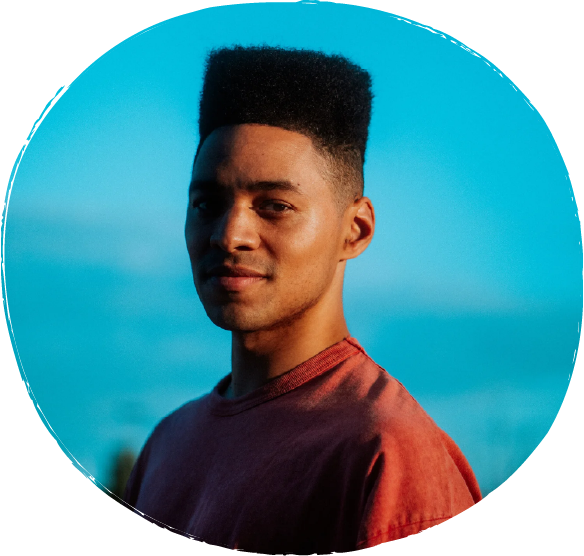
ROB.GREEN is a self-described spreader of love and independent alt-soul/pop artist from Nottingham who draws from Soul, Gospel and Rock music to create captivating performances. Rob channels his experiences growing up mixed-race and gay to write songs that unite and connect with audiences. Rob embodies the ethos of a self-made artist building a thriving career on his own terms.
You can listen to Rob’s music wherever you usually get your music.
HAVE A QUESTION?
Perhaps you’d like some more information about something you’ve seen here or have a question about how we might best work together. Whatever it is, I’d love to hear from you!